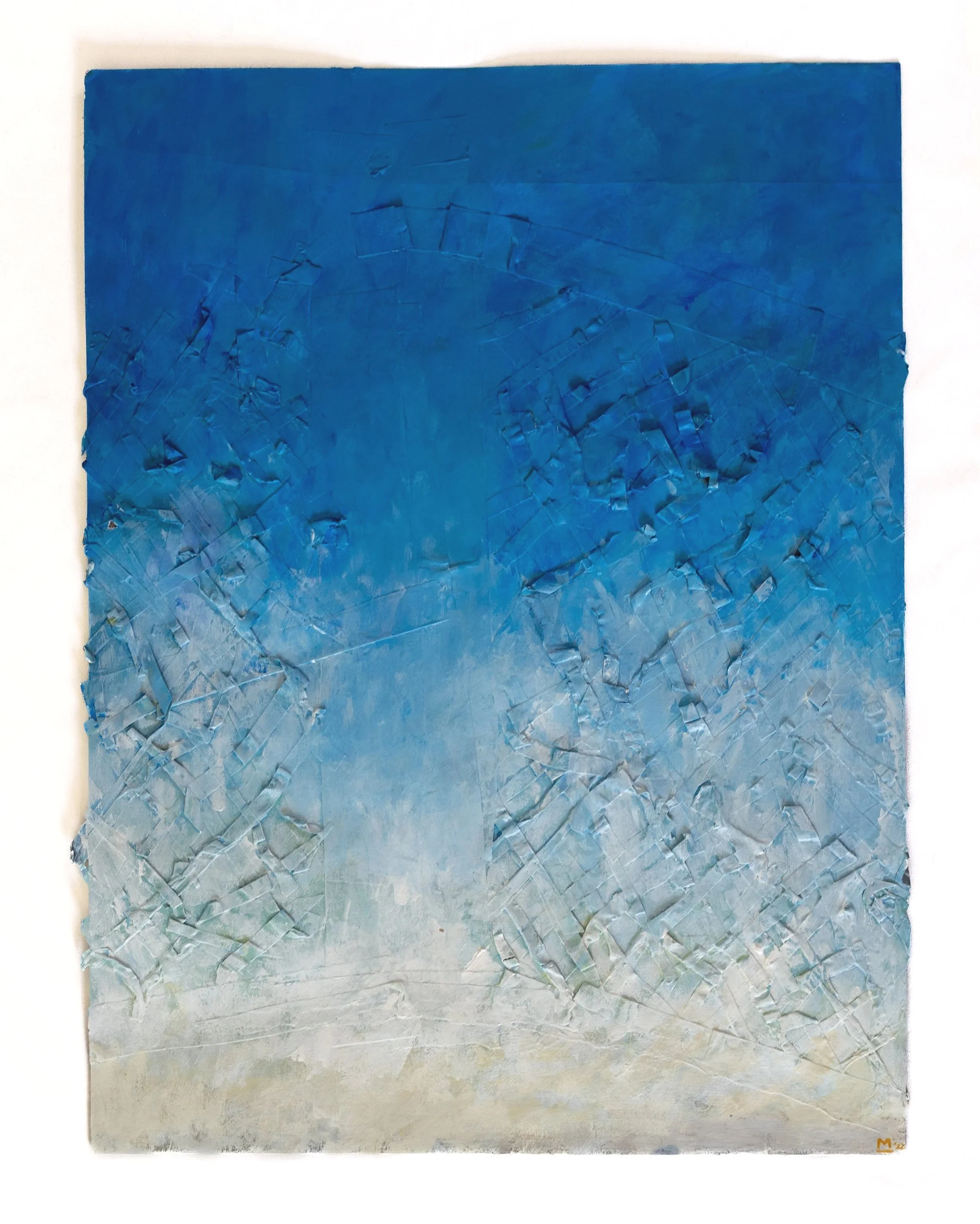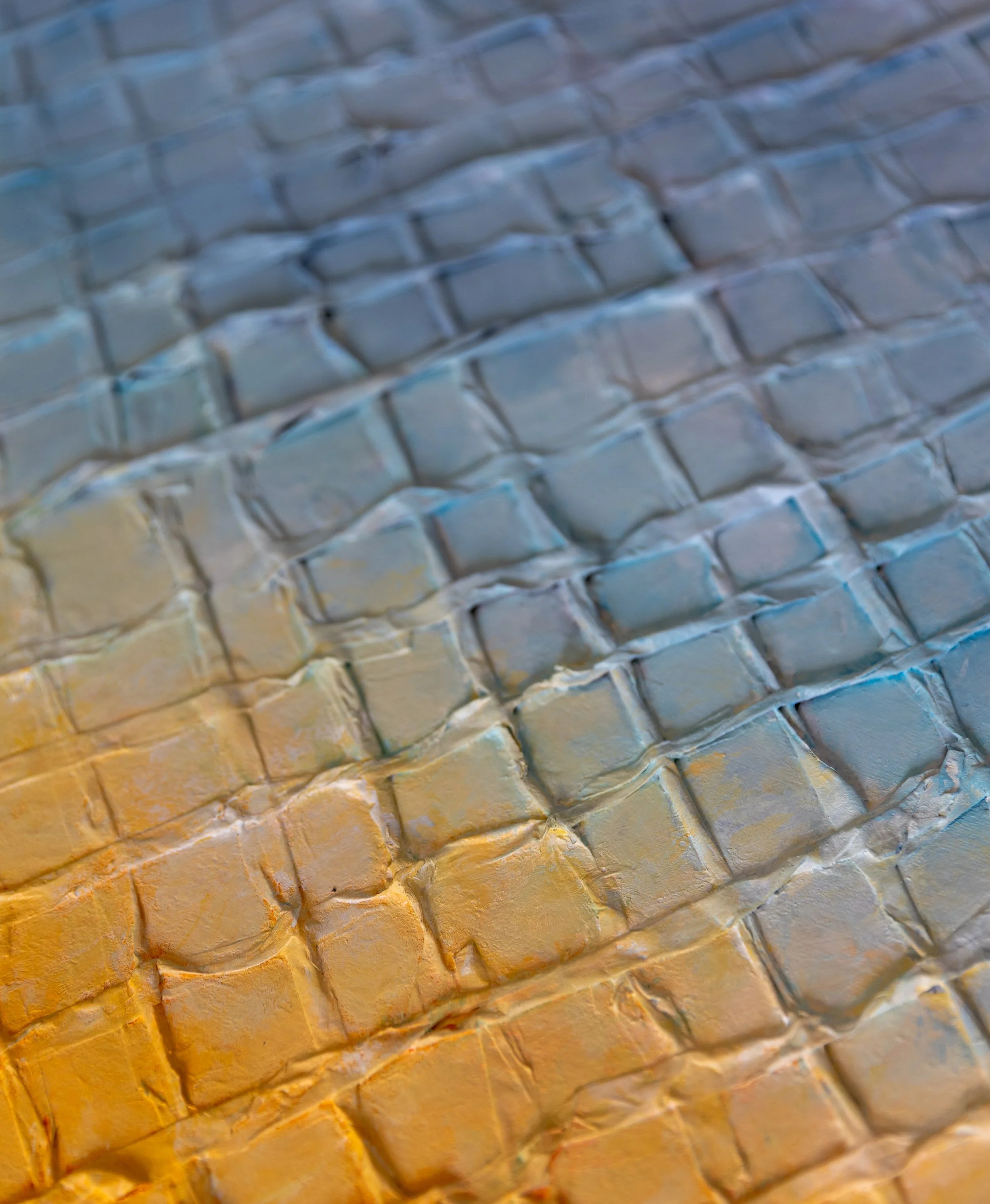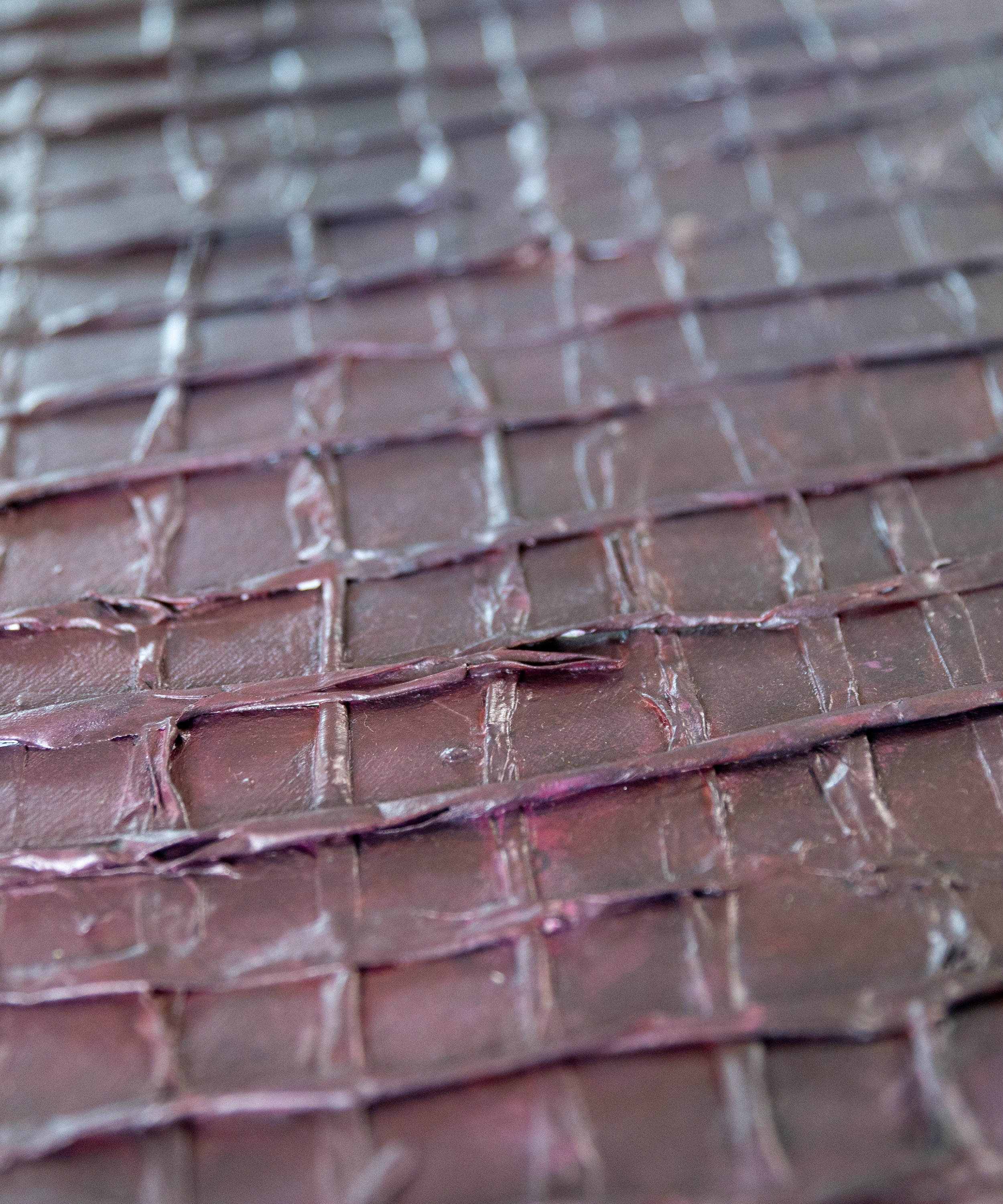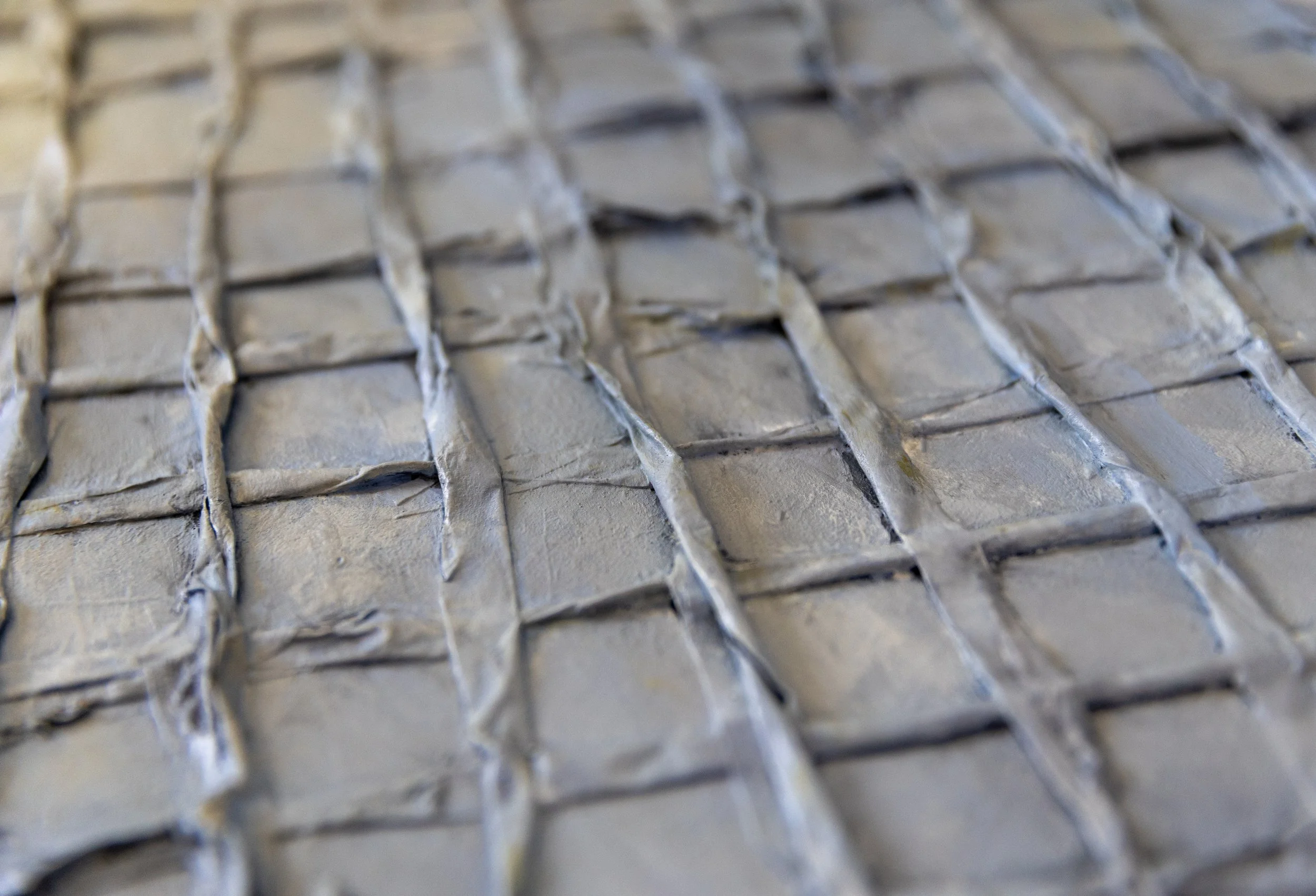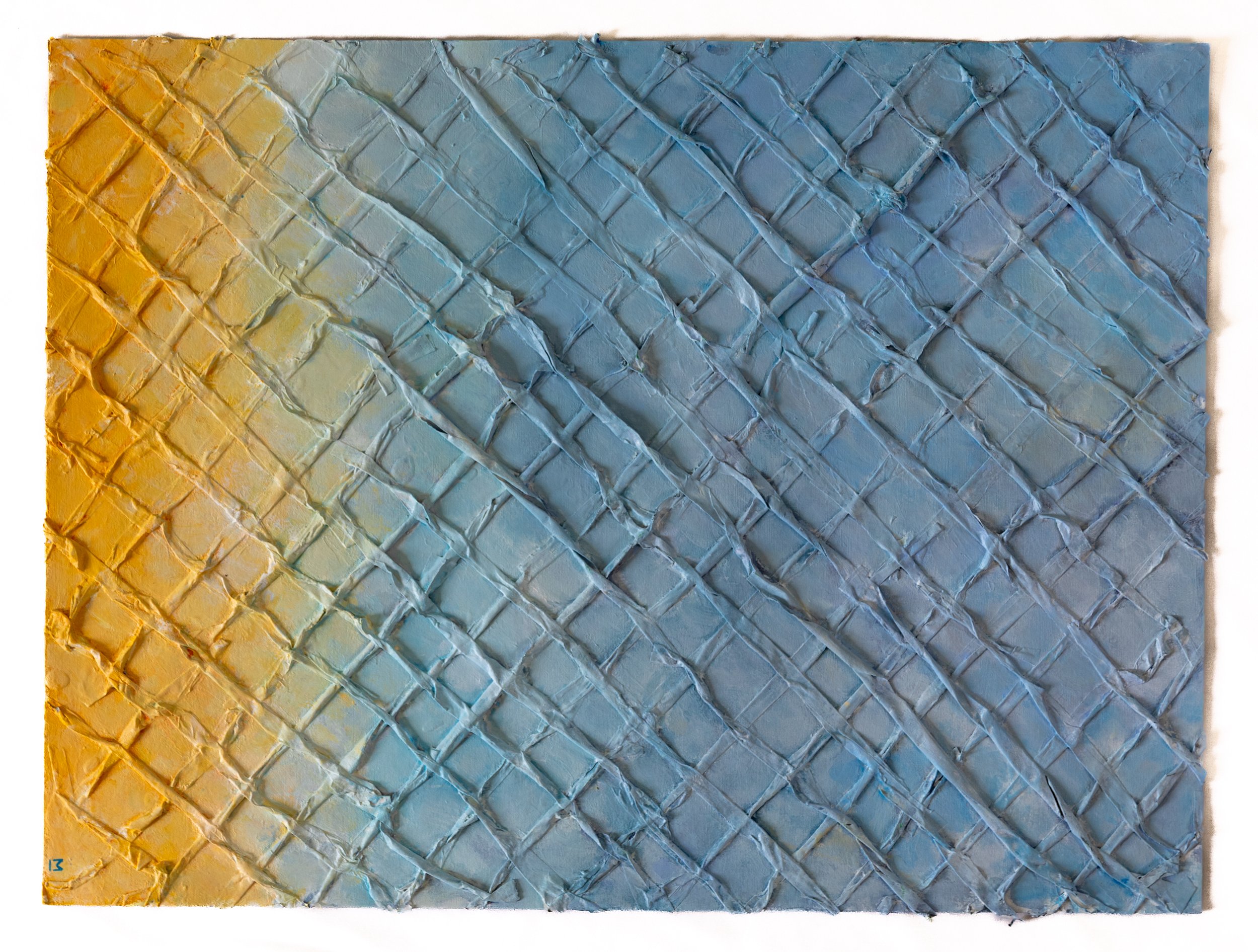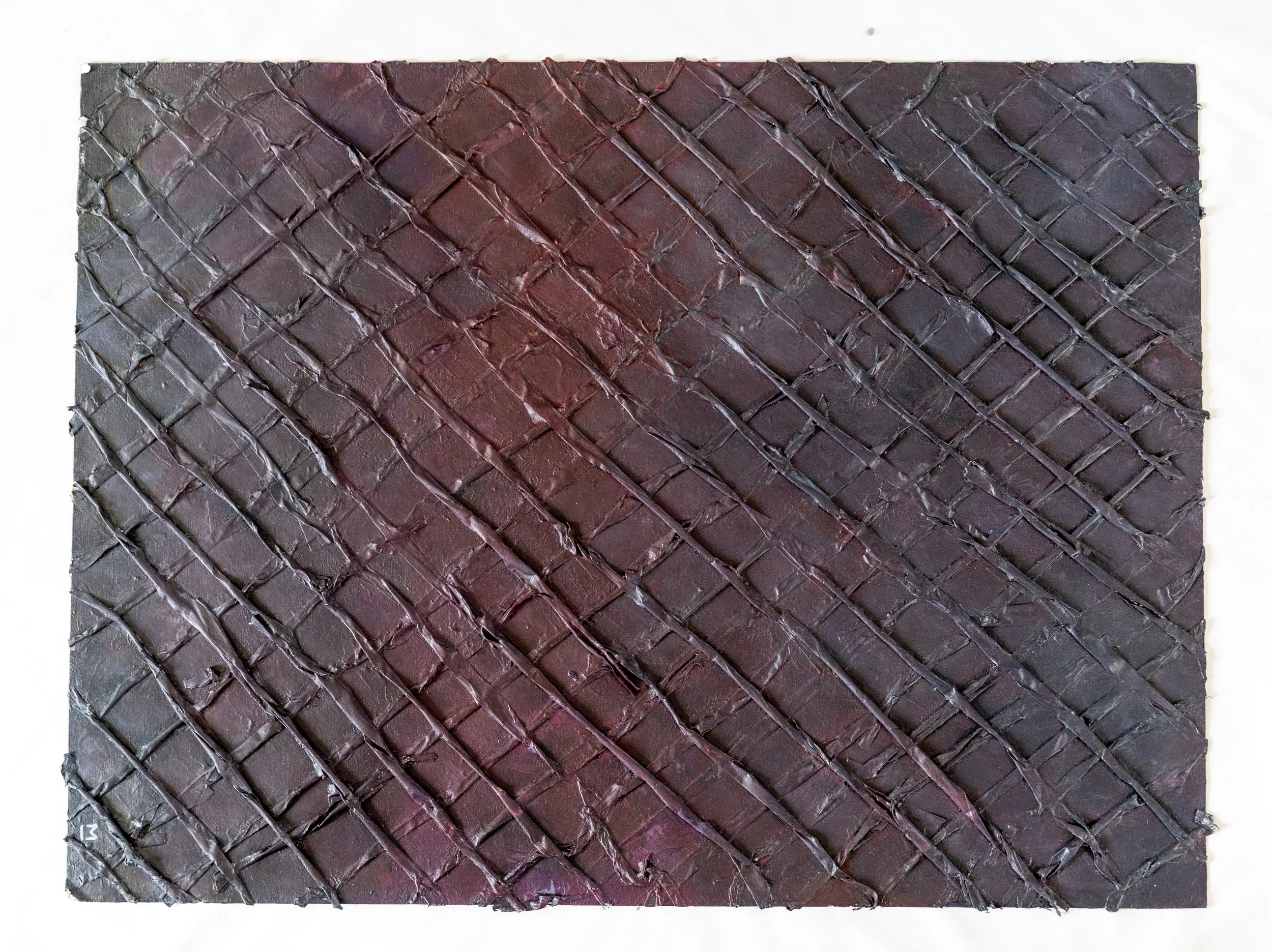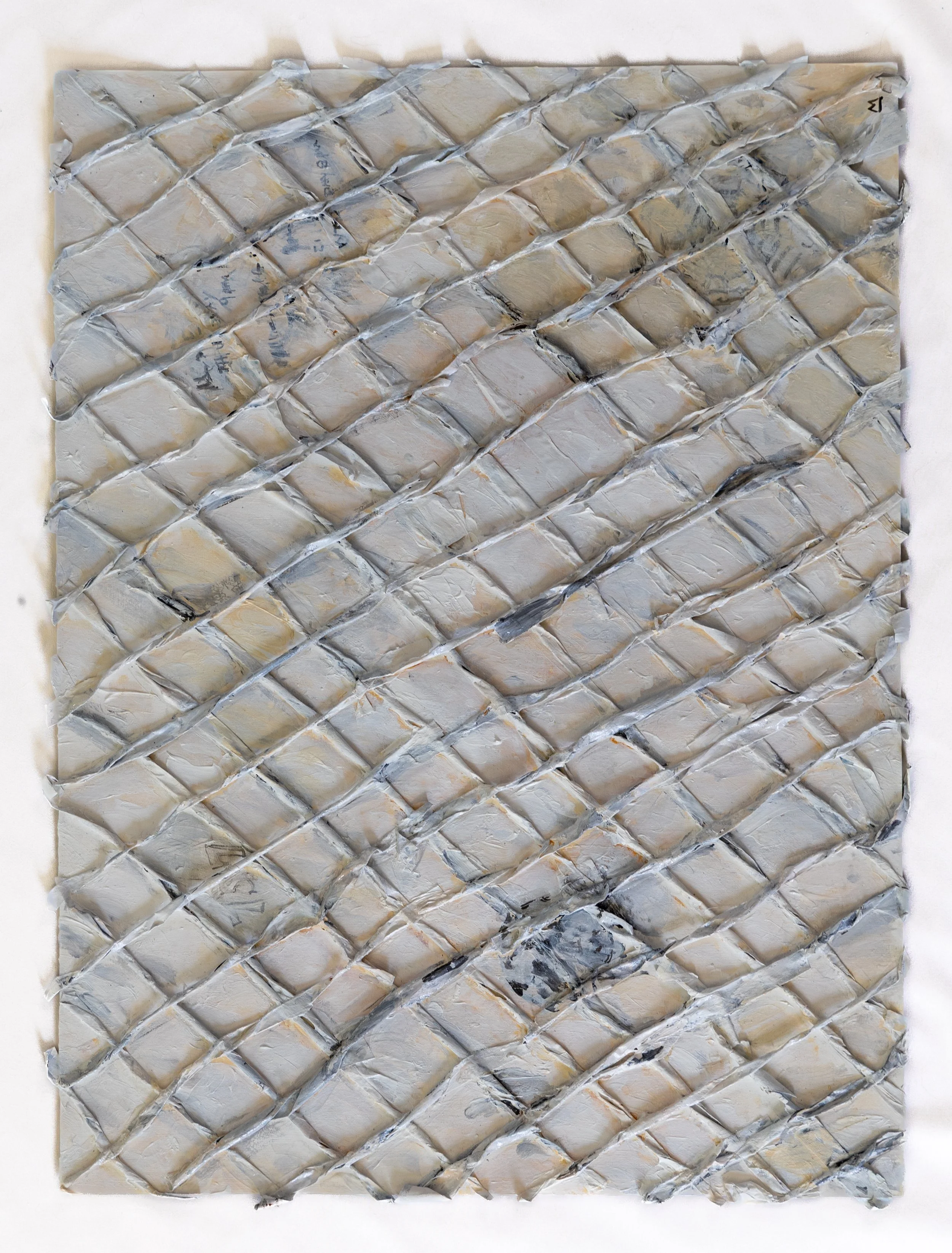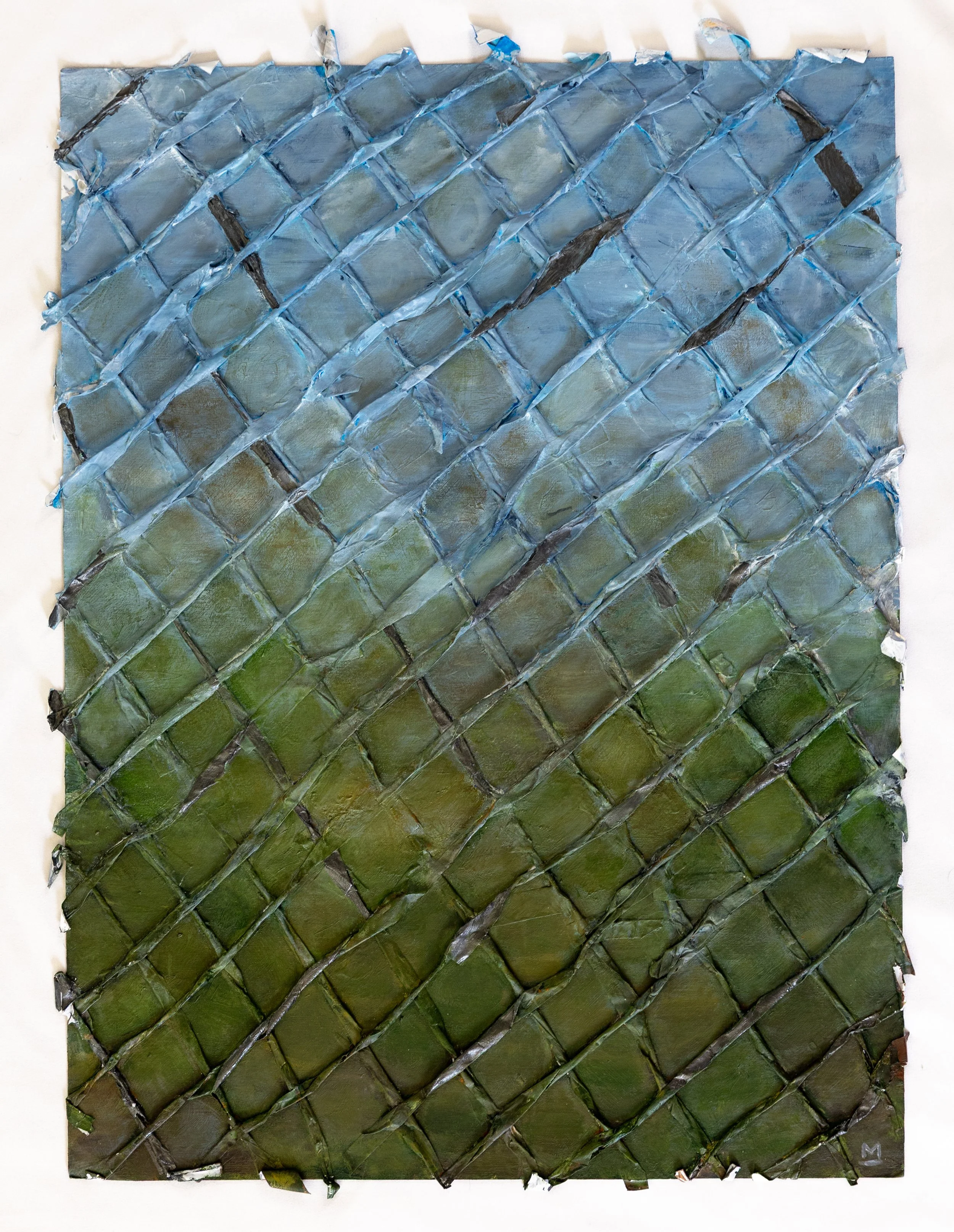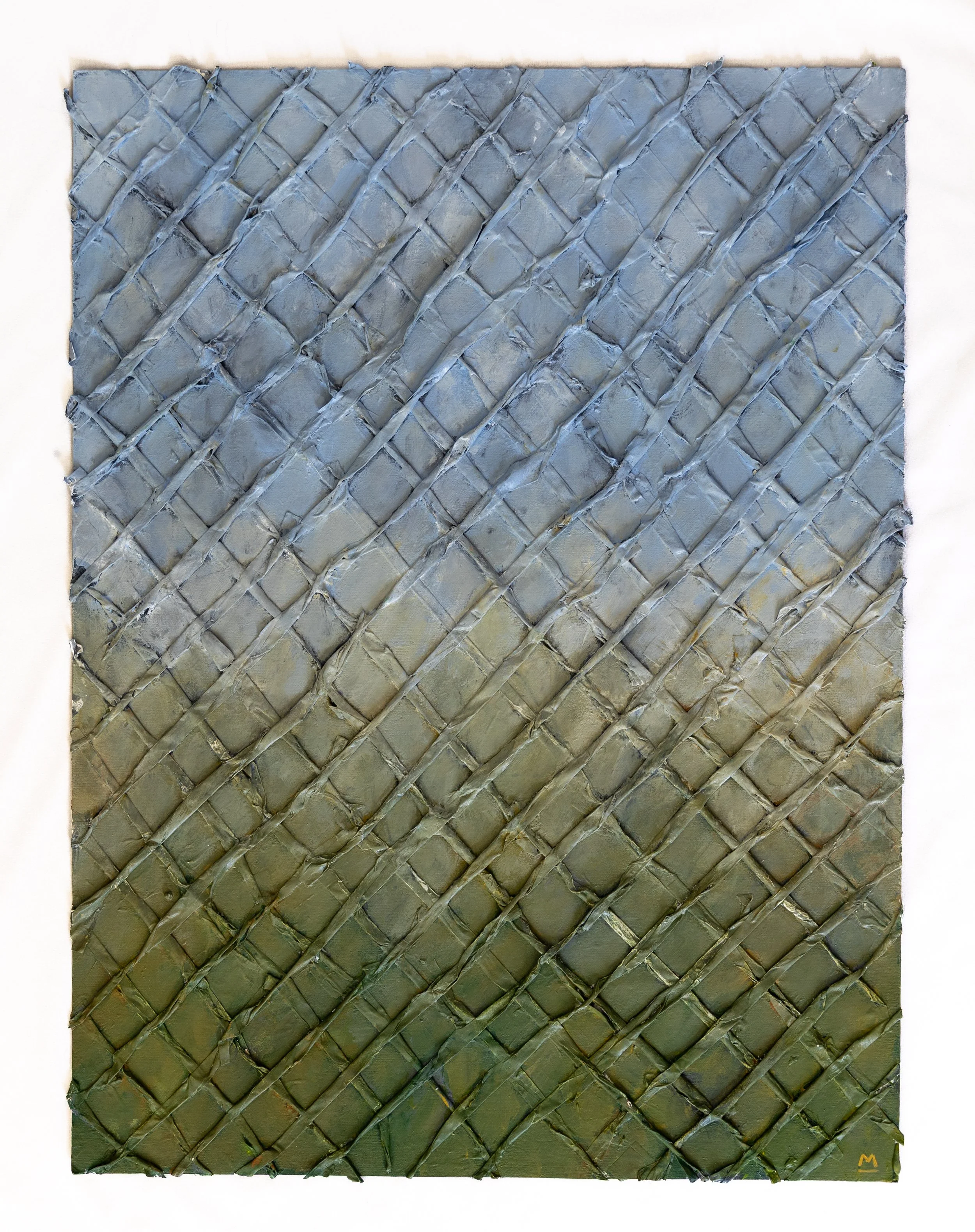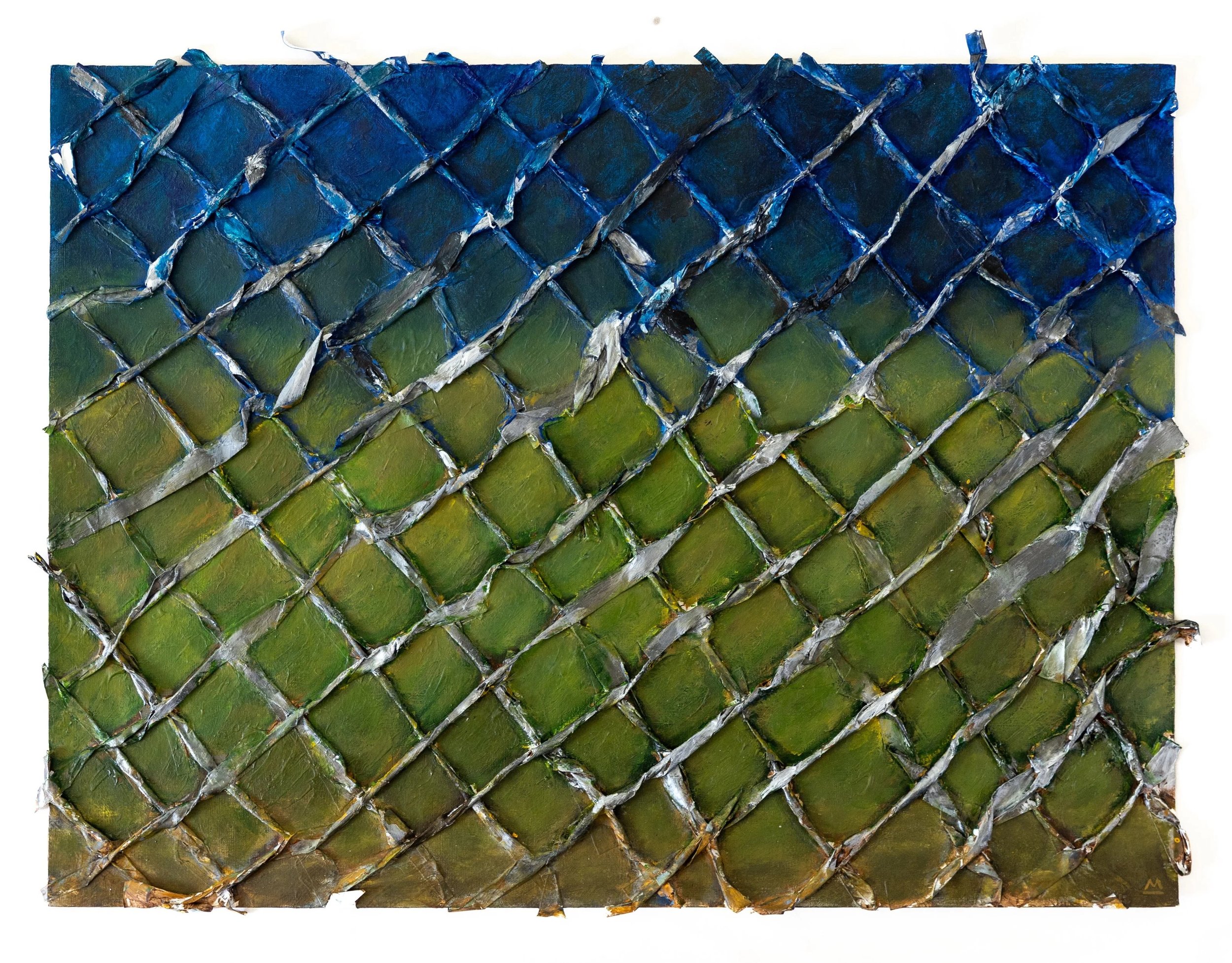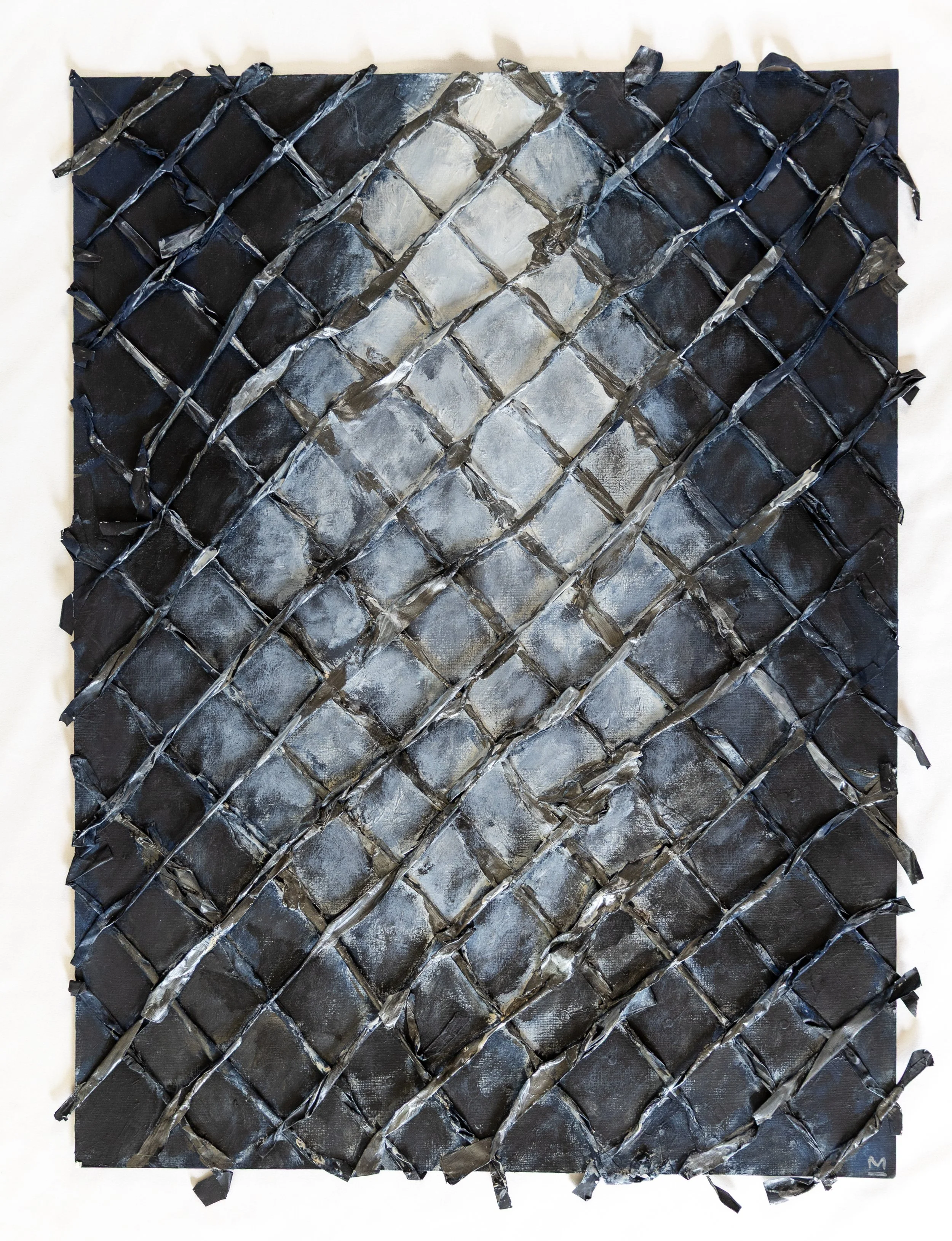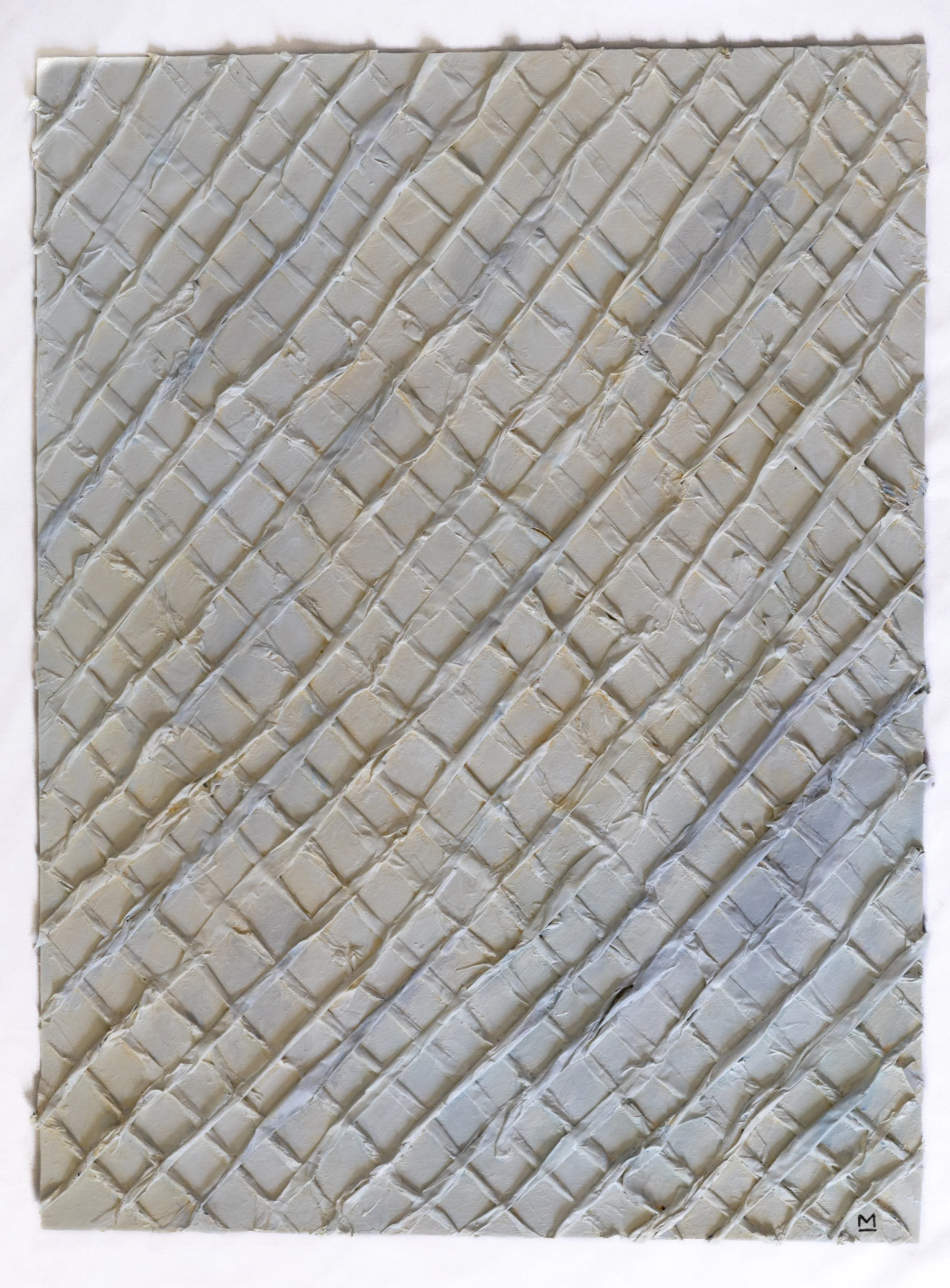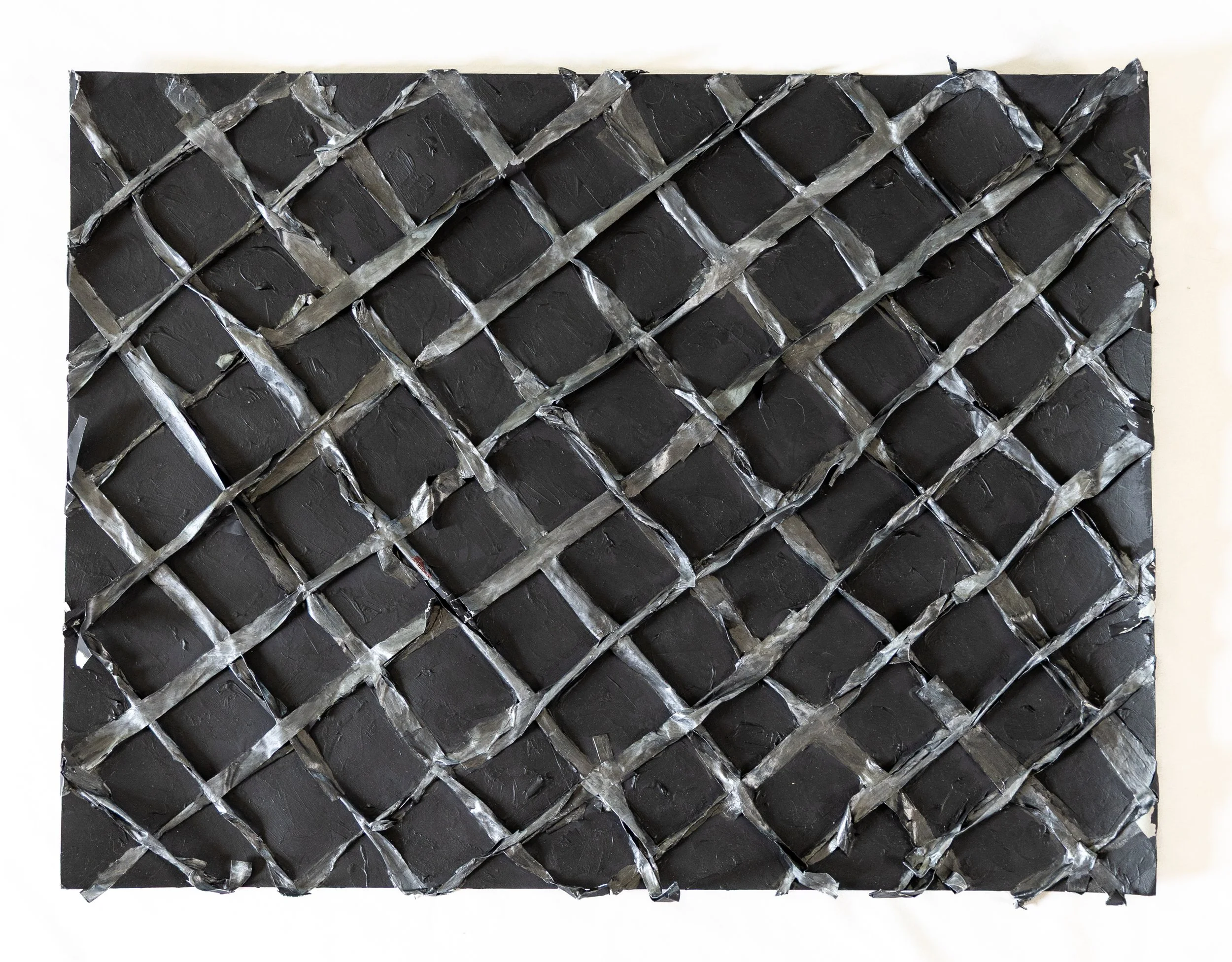

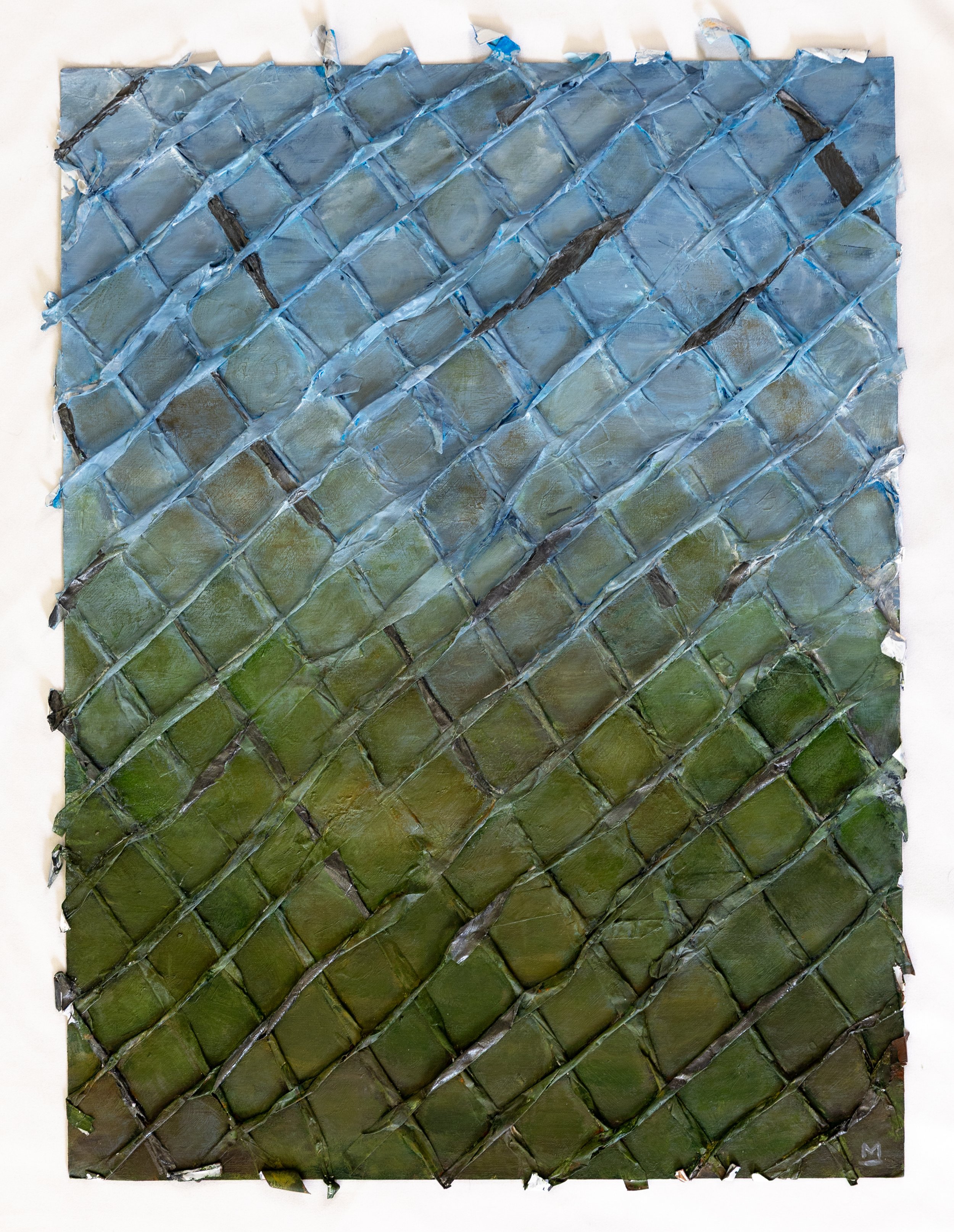
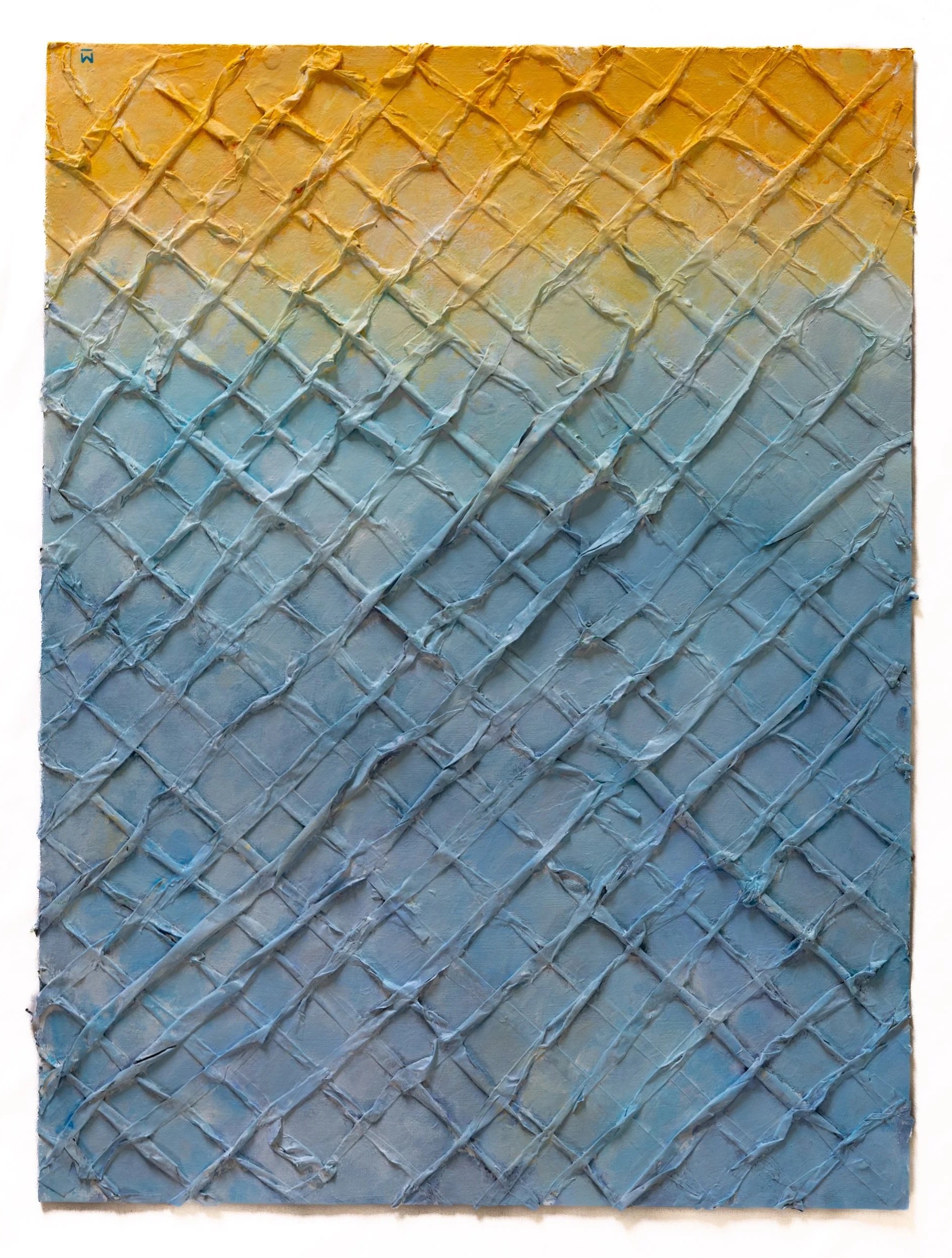
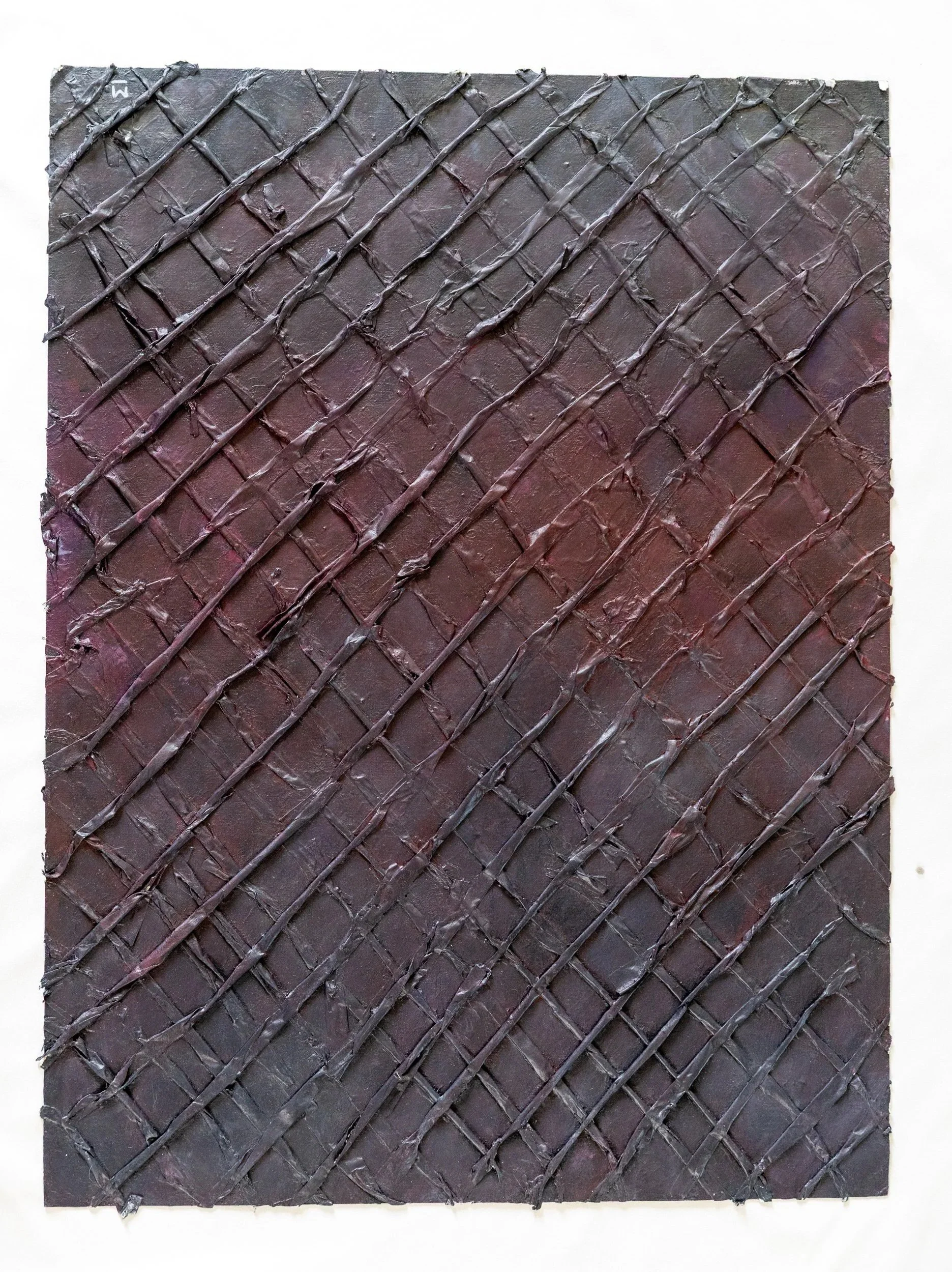
Carceral Landscapes Nos. 01, 02, 03, 04:
These four abstract landscapes function as a visceral mapping of the carceral state, where the natural world is perpetually filtered through the lens of confinement. The abstraction within the landscapes suggests a memory of freedom that is slowly being eroded by the rigid structure of the state. Where traditional landscapes offer a sense of infinite possibility, these works use the "carceral visuality" of the fencing to remind us that for nearly four million people, the view of the future is always obstructed.
The heavy, textured paper mache fencing cuts across each horizon, creating a tactile barrier that the viewer cannot look past. This physical relief mimics the intrusive nature of the American supervision system—a grid that overlays every aspect of an individual's life, from the rural expanses of "prison towns" to the dense urban zones of digital monitoring. The paper mache construction gives the barrier a jagged, institutional weight, turning a flat image into a three-dimensional struggle. It represents a "supervision-to-prison" pipeline that is both fragile and suffocatingly strong.
By placing this symbol of incarceration at the forefront of the natural world, the collection forces a confrontation with the "out of sight" geography of mass incarceration. It demands that we acknowledge the humanity trapped behind the grid, framing the landscape not as an empty space, but as a site of endurance. These pieces do not just depict a place; they document the psychological toll of living in a society that prioritizes the fence over the person. Nos. 01, 02, 03, 04